Hey — Lou here.
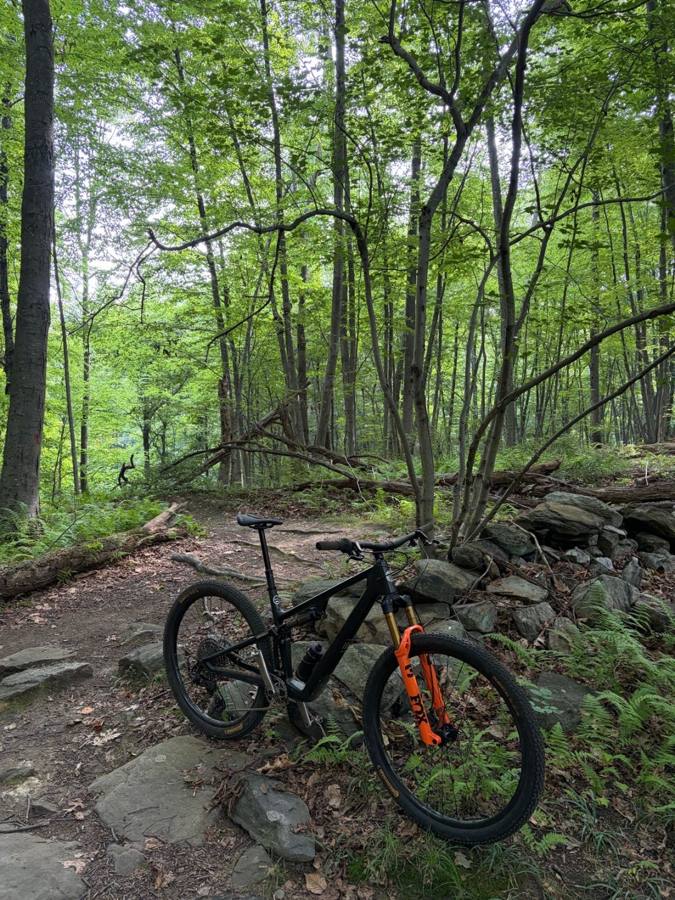
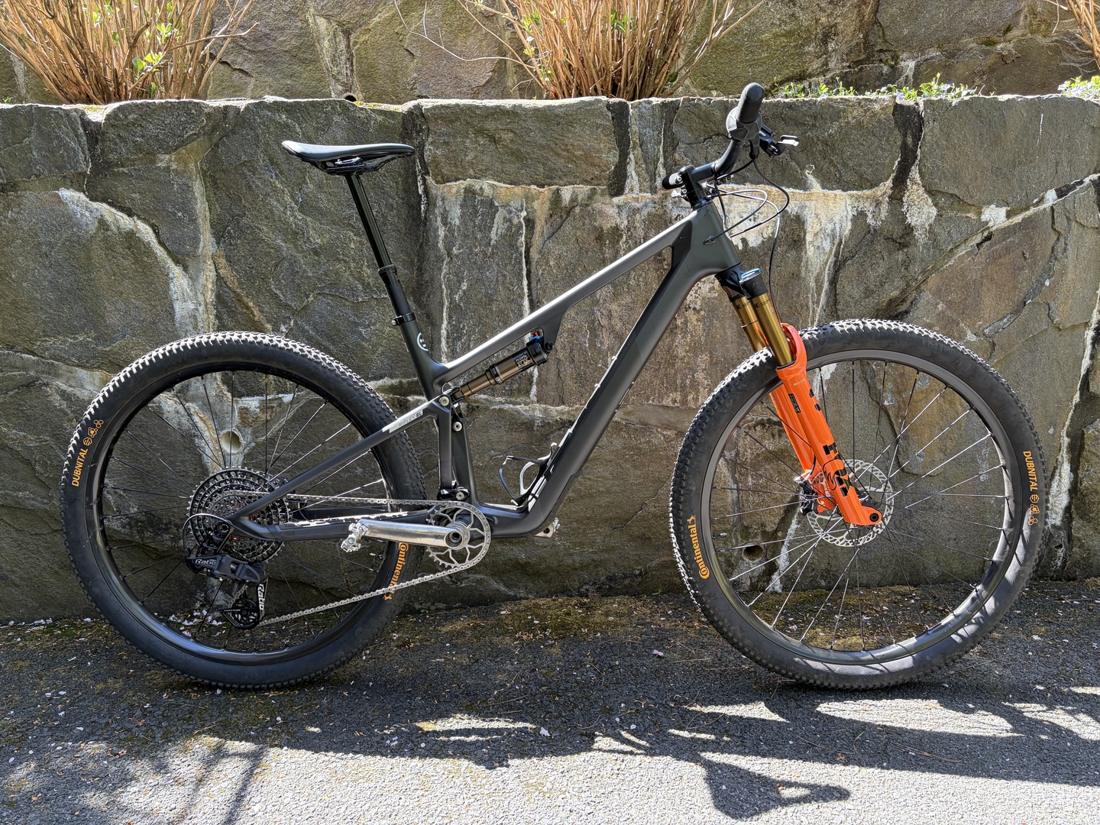
I've built and sold a lot of light bikes over the years, and almost all of them come with a catch. You get the weight, but you give something back — usually your wrists over chatter, sometimes your nerve in a fast, loose corner. I've been on the new Ibis Ripley SL for a few weeks now and I still haven't found the catch. It's the first genuinely light bike I've ridden that didn't make me pay for it somewhere else.
I want to spend a little more time on this one than I usually do, because the story behind it explains why it rides the way it does — and I think once you know it, you'll want one too.
Built by hand, in a factory that runs on sunshine.
Every Ripley SL frame is hand-built by Ibis in their own factory in Pajaro, California, about half an hour south of their headquarters in Santa Cruz. The building has a strange history — it was originally put up in the 1990s by a telecom company that spent $33 million on it, planning to use it as the landing point for a trans-Pacific fiber-optic cable. That never happened, because Monterey Bay next door is a protected marine sanctuary and the cable couldn't come ashore there. Ibis bought the place for roughly a tenth of what it cost to build, then spent months pulling 32,000 pounds of copper wire out of the walls and selling off a backup generator the size of a locomotive.
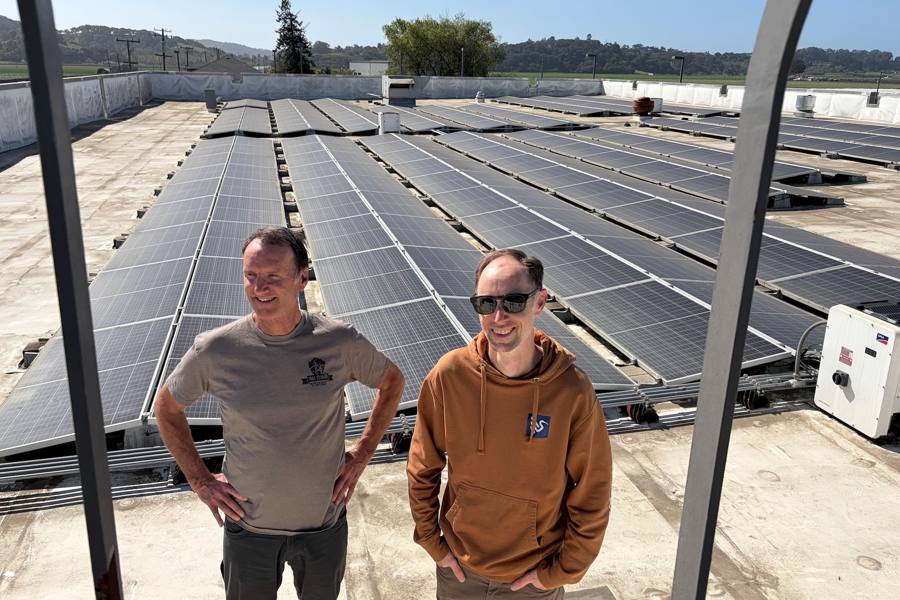
What's on the roof now is the part that matters to us. It's covered in solar panels, and Ibis's engineers told the trade press that even on their busiest production days, the factory only uses about half of what those panels generate. The rest goes back to the grid.
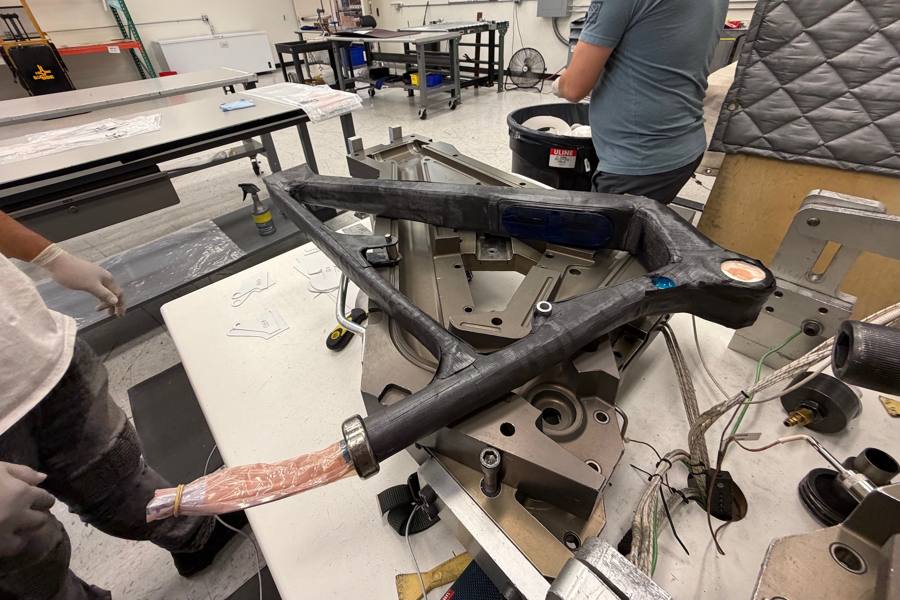
The layup itself is done by hand. Carbon sheets are cut by a computerized cutter into individual pieces, each one numbered so it goes into the mold in exact order. Instead of the heavy steel molds most of the industry uses, Ibis machines their own tooling out of aluminum, with electric heating cartridges built right in — light enough, and efficient enough, that the whole process runs on standard household 220-volt circuits. That's a big part of why solar alone can keep the place running.
None of this is outsourced or automated away. Two of the production leads, Ruben and Oscar, both came out of Kestrel Bikes just down the road in Watsonville — the company that built the world's first all-carbon bike frames back in the late 1980s. Between them they've got over 30 years of hand-laying carbon. It shows in the frame.
This is also where the Exie was born.
Back in 2014, Ibis set up a small carbon prototype lab just to find out whether building frames in the US was even realistic. They spent two years experimenting with materials, mold heating, and tooling before they had anything worth racing. Their first pilot frame — a size-small Ripley LS — came out of that lab lighter, stiffer, and faster to build than the same frame made overseas. That one frame is the reason Ibis went out and bought the Pajaro building.
For their first full model out of the new factory, Ibis didn't pick something easy. They picked the hardest bike they could build: a World Cup cross-country race bike, where every single gram is a fight. That bike became the Exie, and getting it right forced Ibis to solve problems that now show up in every US-made frame they build — size-specific cutting patterns instead of one generic shape stretched across five sizes, refined mold heating, and a finish process precise enough that frames don't need a full day of filler and clearcoat to look right.
With the Exie's run winding down, Ibis has moved all of that hard-won knowledge — and their US frame production — onto the Ripley SL. It's not a new project borrowing an old bike's name. It's the direct successor, built by the same hands, in the same factory, using everything the Exie taught them.
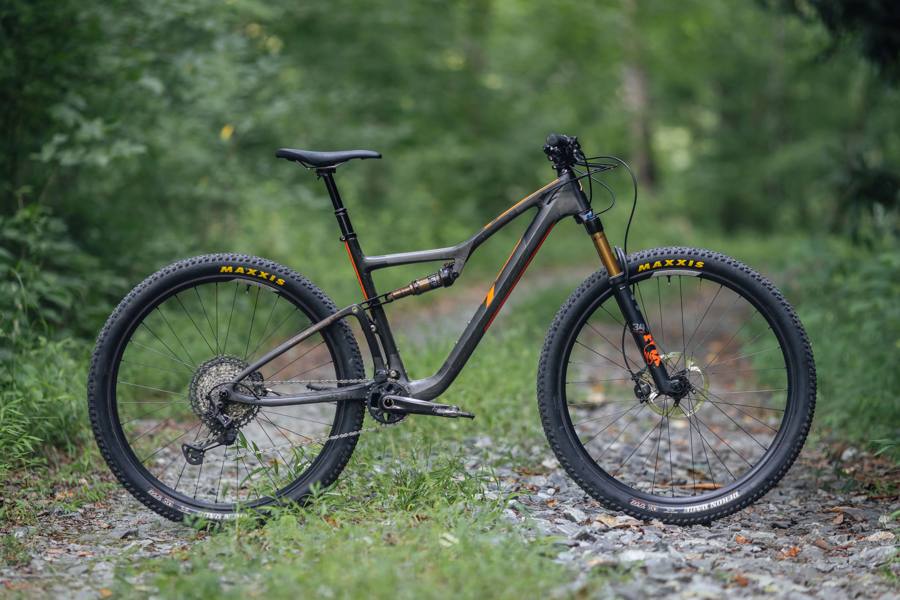
22-and-change pounds, with a dropper post. No harsh ride, no skittish handling.
Here's where all of that factory work pays off on the trail. The frame and shock alone weigh 5 pounds. Complete bikes start around 25 pounds stock, and with the right parts, you can get well under that — we built one for a customer, Wilcoln, that came out to exactly 22.8 pounds complete, dropper post and pedals included.
What makes that number mean something is what it doesn't sacrifice to get there. Most bikes light enough to compete with a World Cup XC race bike ride like one — harsh over chatter, nervous in a fast corner, unforgiving the second your line is a little off. The Ripley SL doesn't. It keeps a real 130mm fork instead of a lighter, twitchier XC unit, 117mm of rear travel through Ibis's DW-link suspension instead of the 90-100mm you'd find on a pure race bike, a dropper post as standard equipment instead of an afterthought, and clearance for real trail tires instead of skinny XC rubber.
The result is a bike that climbs like it doesn't want to be there, then lets you actually relax and enjoy the way down — which, if you've ever ridden a stripped-down XC race bike on anything technical, is not something you can say about most of them.